


Transshipment now accounts for 28-30% of global container traffic, highlighting its growing importance in international trade. For importers, knowing how transshipment works is important to managing their supply chains and spotting possible problems early.
With accurate and timely tracking, businesses can use transhipment to streamline operations and maintain control over their cargo across multiple ports.
Real-time tracking solutions like Vizion provide critical visibility during the transhipment process, delivering data that helps businesses stay informed, mitigate delays, and avoid costly fees.
What is Transshipment?
Transshipment involves moving cargo through intermediate hubs to reach its final destination, making it a valuable strategy for optimizing shipping routes and accessing distant markets.
The process is carried out in distinct stages that ensure the cargo transitions smoothly from one vessel or mode of transport to another.
Step-by-Step Guide to the Transshipment Process
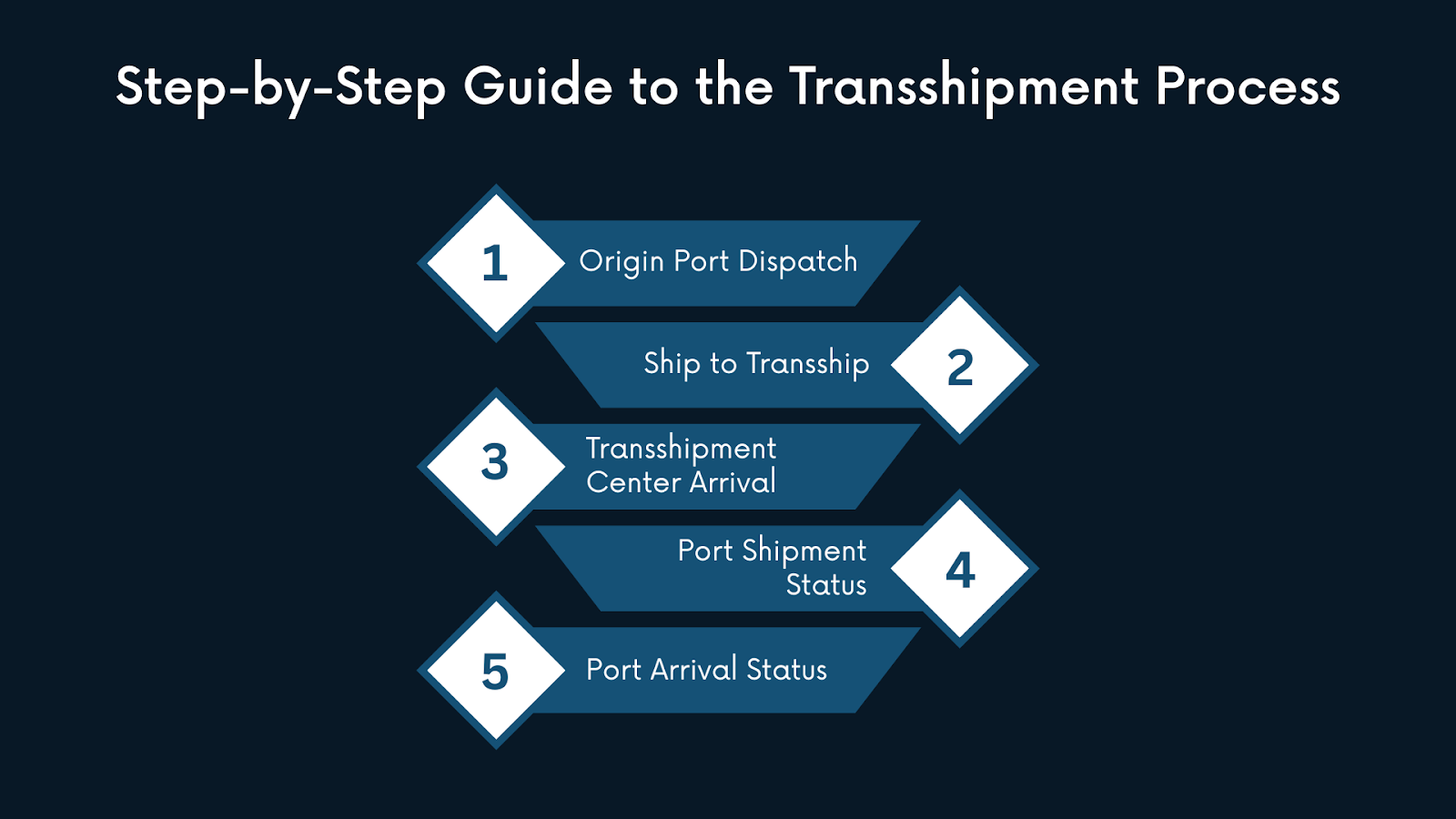
Each step in the transhipment process helps keep cargo on track and ensure it reaches the final destination efficiently.
Step 1. Dispatch from Origin Port
The shipment starts at the country of origin and is loaded onto a vessel scheduled to call at a transhipment hub rather than the final destination.
Step 2. Shipment to Transshipment Center
The cargo travels to a designated transhipment hub, where it may be grouped with other shipments headed to similar regions.
Step 3. Arrival at the Transshipment Center
Upon arrival, the cargo is offloaded and temporarily stored. This stage involves coordination to ensure it is moved to the next vessel or mode of transport with minimal delay.
Step 4. Shipment to Destination Port
The cargo is reloaded onto a new vessel or transport mode bound for the final destination. Route adjustments may be made depending on capacity, scheduling, or regional access.
Step 5. Arrival at Destination Port
The shipment reaches its final port and is ready for pickup or onward delivery. Real-time visibility at this stage helps importers coordinate last-mile movement and avoid unnecessary storage or detention charges.
Types of Transshipment
Transshipment comes in different forms depending on how and why cargo is transferred between vessels or transport modes. Here are the main types:
1. Based on the Mode of Transport
Transshipment can involve different transport methods, combining sea, air, rail, and road, depending on the shipment’s needs.
- Sea-to-Sea Transshipment: Cargo moves from one vessel to another at a port. For example, a large ship arriving at Mumbai’s JNPT transfers containers to smaller vessels for delivery to smaller ports.
- Sea-Air Transshipment: Cargo arrives by sea and continues by air. This method is used when speed is critical, like when exports from India pass through Dubai to Europe.
- Air-Sea Transshipment: Cargo arrives by air and continues by sea, often for high-value goods needing fast initial transport.
- Intermodal Transshipment: Cargo shifts between sea, rail, and road transport. A shipment might arrive by sea, move inland by rail, and be finished by truck.
2. Based on Legal Status
Transshipment is classified based on whether cargo crosses international borders during transfer.
- International Transshipment: Cargo crosses at least one international border during transfer, like Indian goods passing through Singapore before reaching the US.
- Domestic Transshipment: Cargo stays within the same country, like containers moving from Mumbai to Port Blair via Chennai.
3. Based on Purpose
Different operational goals define transshipment types, from central hubs to connecting routes between carriers.
- Hub-and-Spoke Transshipment: This is the most common model. Large vessels serve main hub ports, and smaller vessels distribute cargo to regional ports.
- Relay Transshipment: Cargo transfers between vessels on different long-haul routes, connecting services that don’t usually intersect.
- Interlining Transshipment: Cargo moves between vessels of different shipping lines, often under carrier alliance agreements.
How Does Transshipment Differ from Direct Shipment?
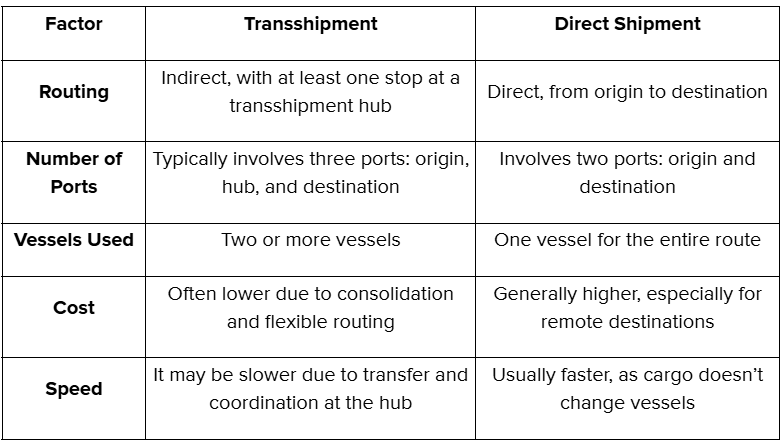
While transhipment and direct shipment are used to move cargo internationally, their operations differ. Transshipment involves a midpoint where cargo is transferred to another vessel, while direct shipment carries the cargo straight from origin to destination on a single vessel.
Importance of Transshipment for Importers
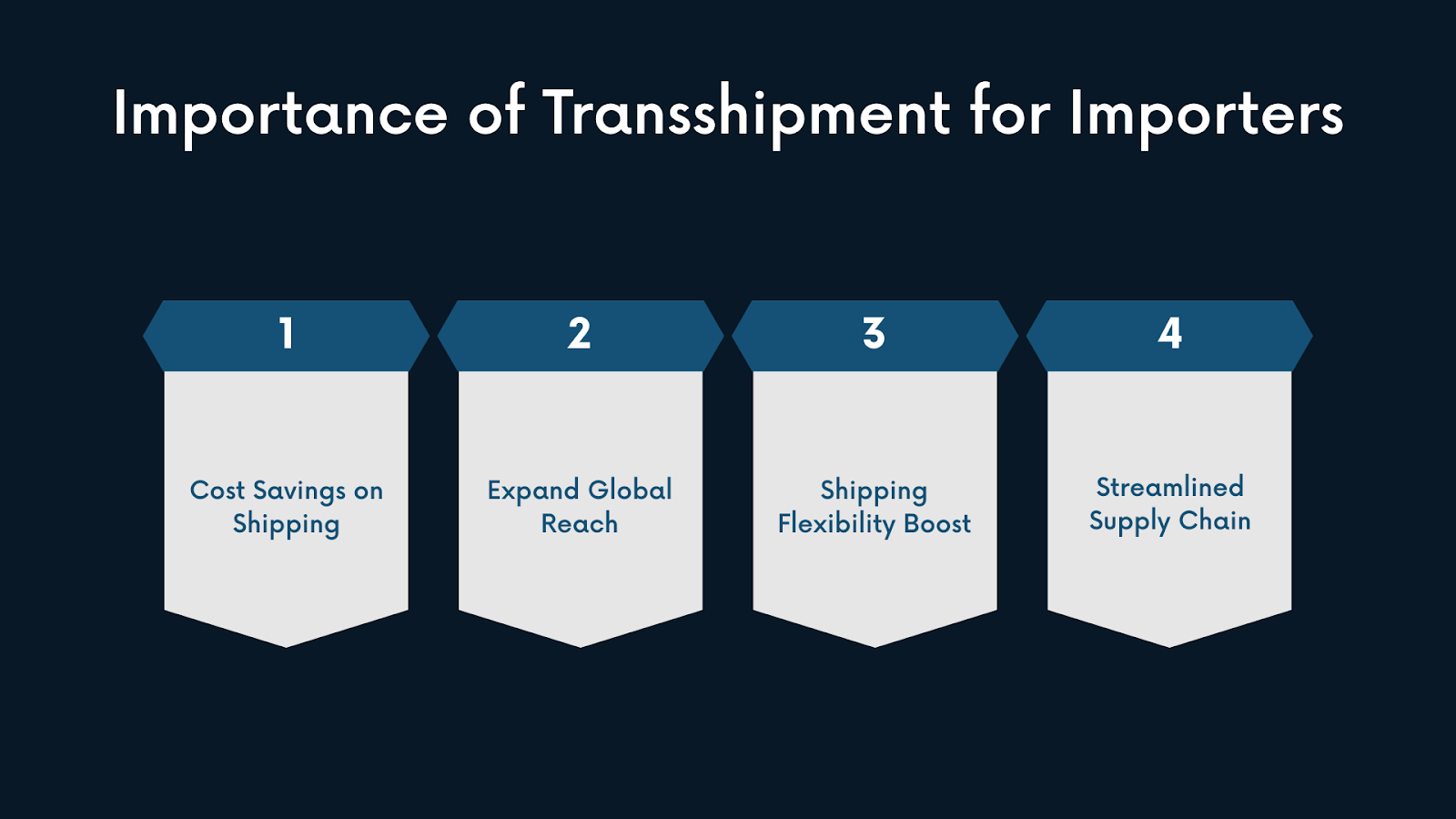
Transshipment isn't just a workaround for unavailable direct routes; it can offer real value to importers looking to improve their shipping operations and reduce overhead. Here’s how:
1. Cost Savings on Shipping
For many importers, transshipment opens the door to more affordable transport. Instead of relying on premium direct shipping, businesses can move cargo through intermediate hubs and take advantage of lower rates on indirect routes.
- Consolidation at transshipment hubs helps reduce per-container transport costs.
- Importers can avoid high premiums often associated with direct access to less-trafficked ports.
2. Access to More Global Markets
Not all destination ports are reachable by direct shipping lanes. Transhipment bridges that gap by connecting through strategic hubs, which means importers aren’t limited by route availability.
- Makes it easier to source products or components from a wider range of suppliers.
- Expands geographic reach without requiring special transport arrangements.
3. Increased Shipping Flexibility
Transshipment gives importers more routing options, which becomes valuable when managing shipment timelines or reacting to disruptions.
- Cargo can be rerouted through alternate hubs if delays or congestion occur.
- Offers greater control over how and when shipments arrive, especially in uncertain conditions.
4. Improved Supply Chain Efficiency
When coordinated well, transshipment supports smoother operations and more predictable shipping flows. Instead of relying solely on high-traffic lanes, importers can plan routes that fit their inventory and delivery needs.
- Strategic hub connections help avoid unnecessary hold-ups at origin or destination.
- Shipments can be matched with better-fitting carriers for the final leg of the journey.
Transshipment Challenges and Ways to Overcome Them
Managing transshipment efficiently requires more than just moving cargo through ports; it demands consistent visibility, strong coordination, and accurate data across multiple handoffs. Here are key challenges importers often face, and how the right solutions can help address them.
1. Limited Visibility
When cargo passes through multiple ports, tracking its location or status at any given time becomes difficult. Without visibility, teams struggle to anticipate delays or make informed decisions.
- Vizion’s Solution: Real-time container tracking provides consistent updates across all shipping legs, keeping your team informed from origin to final destination, even during handoffs at transhipment hubs.
2. Customs and Regulatory Complexities
Different ports and countries enforce varying documentation and compliance rules. This increases the risk of missed paperwork or delays in customs clearance.
- Vizion’s Solution: Customs Clearance data helps you manage regulatory steps more effectively by identifying which shipments need attention, providing visibility into container status across top U.S. ports.
3. Coordination Across Systems and Carriers
With multiple carriers, schedules, and systems involved, transhipment requires careful coordination. Disconnected data sources can slow down operations and introduce manual errors.
- Vizion’s Solution: Data integration through Vizion's API connects with your existing systems, like ERPs or TMS, so your team has access to standardized, timely tracking data without requiring manual updates.
4. Unexpected Fees and Costs
Cargo left too long at transshipment ports or destination terminals may rack up demurrage charges, especially with delayed or missed handoffs.
- Vizion’s Solution: With events like Last Free Date alerts, Vizion helps businesses plan pickups better and avoid unnecessary demurrage fees, especially at inland facilities with shorter free time.
5. Port Limitations and Infrastructure Gaps
Some ports aren’t equipped to handle large vessels or heavy volumes. These infrastructure gaps force transshipment through alternate hubs, which can cause delays or reduce efficiency.
- Vizion’s Solution: Port performance and port activity data let importers evaluate how efficiently ports operate, helping them choose better entry points and minimize risks tied to underperforming terminals.
Conclusion
Transshipment is becoming more important in global shipping, giving importers enhanced access to new markets and alternative routes. When handled correctly, it can reduce costs and improve delivery options without compromising reliability.
To manage that complexity, importers need clear, real-time visibility into every stage of the journey. Vizion makes that possible by connecting systems, tracking containers across multiple ports, and offering insights that help avoid unnecessary delays and charges.
Looking to improve your container visibility? Book a demo with Vizion.
FAQs
Q1. How does transshipment impact shipping costs?
A1. Transshipment can reduce shipping costs by allowing cargo to travel through more flexible and affordable routes. It enables consolidation and access to hubs offering lower freight rates than direct shipping.
Q2. Can transshipment lead to delays?
A2. Yes, delays can occur, especially if there are scheduling mismatches, port congestion, or limited vessel availability at the transshipment hub. That’s why tracking and timely coordination are essential for keeping shipments on schedule.
Q3. How can businesses monitor transshipment activities effectively?
A3. The most effective way is through real-time container tracking that updates every leg of the journey. Vizion helps businesses stay informed, anticipate issues, and coordinate across systems without manual tracking.
Q4. Is transshipment suitable for all types of cargo?
A4. Not always. While it’s ideal for containerized freight with flexible delivery windows, some sensitive or high-risk cargo may be unsuitable for extra handling during transfers. It depends on the cargo type, timing needs, and route availability.
%20-%202026-09-17T163139.307.png)
%20-%202026-08-26T095403.692.png)
%20-%202026-08-24T110906.499.png)


