


In maritime logistics, shipment release is a critical step that signals when a cargo shipment is cleared to move from the port to its next destination. This process follows customs clearance, ensuring all required documentation is completed and the cargo is free of holds.
The global maritime logistics market was valued at USD 386,915.2 million in 2024 and is projected to grow at a CAGR of 3.80% through 2031. Any delays in shipment release can have wide-reaching financial impacts.
These delays in shipment release often lead to costly demurrage and detention charges, which accrue the longer the cargo remains at the port. These additional costs can disrupt the supply chain, leading to longer delivery times and frustrated customers.
With the right shipment tracking solutions, like those offered by Vizion, businesses can gain real-time visibility into the release status of their cargo. It allows managing delays proactively and optimizing logistics operations.
What Is Shipment Release?
Shipment release is the official clearance of goods to leave the port. It occurs after customs and terminal procedures are completed. Once the release is granted, the shipment is free to continue its journey to the destination. This could be a warehouse, a distribution center, or sent directly to the customer.
The release typically follows several key steps:
- Customs clearance: Ensuring all import/export regulations and duties have been paid and all required documentation is in order.
- Terminal procedures: This includes verifying the cargo’s readiness and inspecting the contents if necessary.
- Carrier authorization: The shipping company or carrier officially releases the cargo after confirming all conditions are met.
It's important to note that shipment release is not the same as the final delivery. While the release indicates that the cargo is cleared for movement, it may still require transport and final handling before reaching its destination.
Why Shipment Release Matters?
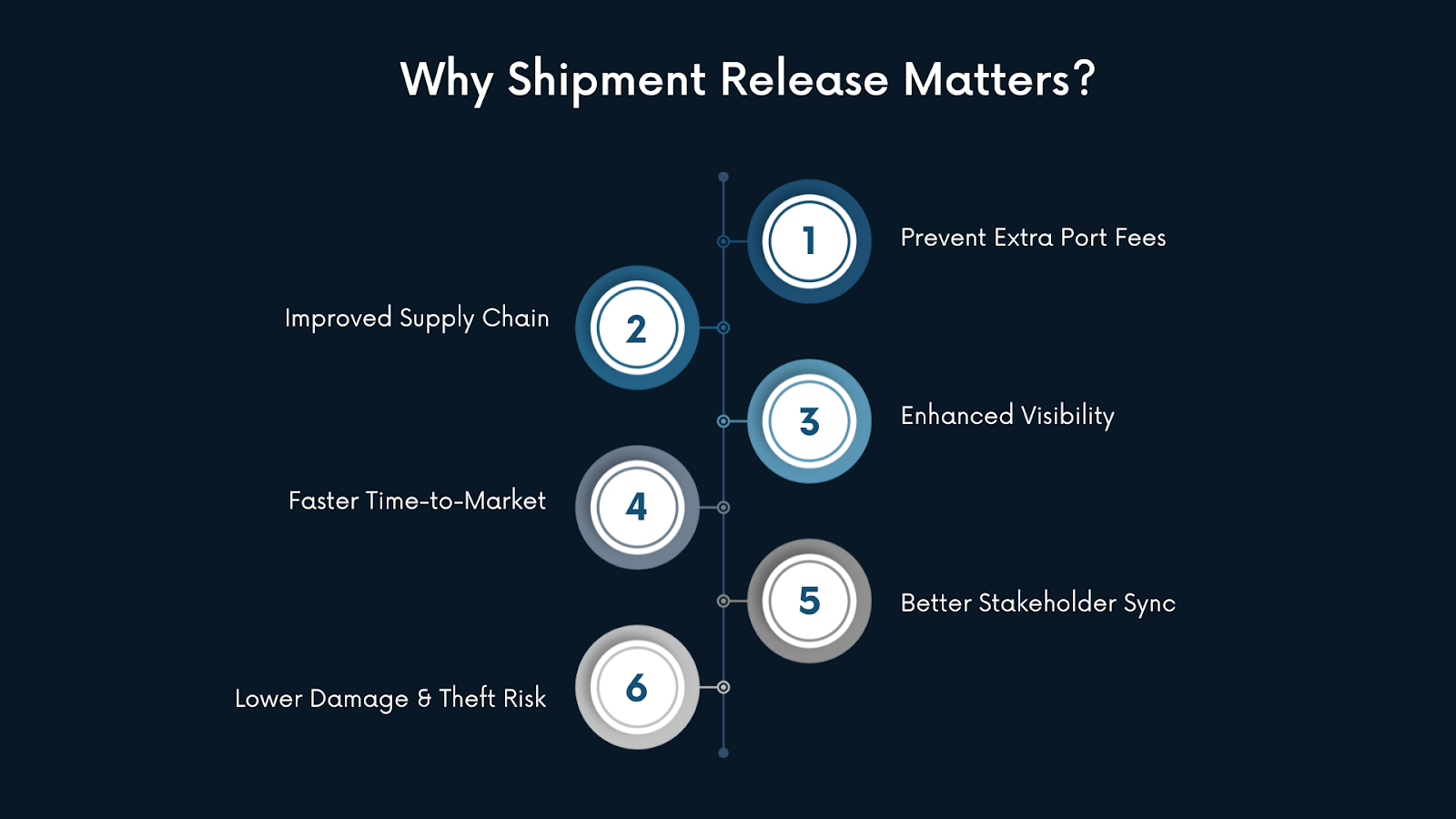
Timely shipment release is essential for maintaining a smooth and efficient supply chain. Delays in this process can have significant repercussions. The key reasons why shipment release matters include:
- Avoiding Demurrage and Detention Charges: Delayed release can result in costly demurrage and detention fees. These charges accrue the longer the cargo remains at the port, adding unnecessary expenses to your shipment.
- Improved Supply Chain Efficiency: When shipments are released on time, it helps businesses avoid disruptions and maintain their logistics schedule. This ensures that goods reach their destination as planned.
- Enhanced Visibility: Shipment release marks a key milestone in the journey. With real-time shipment tracking, businesses can track when cargo is released and better plan for subsequent steps in the supply chain.
- Faster Time-to-Market: When shipments are released promptly, products can be delivered faster, improving time-to-market and customer satisfaction. This is especially critical for businesses that rely on just-in-time inventory systems.
- Better Coordination Across Stakeholders: Understanding when a shipment is released enables better coordination between shippers, carriers, and customers. This ensures all parties are aligned, reducing the risk of miscommunication and delays.
- Minimized Risk of Damage or Theft: Shipments left at the port for too long are vulnerable to potential damage or theft. Releasing goods on time reduces the chance of delays, damage, or theft.
How to Track Shipment Release Status
Tracking the release status of your shipment is essential for staying informed and managing potential delays. Here’s how you can keep tabs on the shipment release process:
1. Real-Time Shipment Tracking
Using real-time shipment tracking tools like Vizion, you can monitor your cargo’s movement and release status. It provides updates on when your shipment has cleared customs and is authorized for release.
2. Carrier and Terminal Updates
Shipping companies and terminals often send notifications or provide access to online platforms where you can check the status of your cargo. These updates typically include information about the customs clearance, hold status, and the final release.
3. Automated Container Tracking
With automated container tracking systems, you can receive instant alerts whenever your shipment’s release status changes. This helps you stay up to date without manually checking the status.
4. Shipment Tracking APIs
Integrating a shipment tracking API into your system allows you to receive detailed, real-time updates on your shipments’ status. This can be particularly useful for businesses that manage multiple shipments at once and need to track them efficiently.
5. Communicating with Your Carrier
If the release status isn’t clear, you can always reach out directly to your carrier or terminal operator for clarification. They can provide more specific details regarding any delays or requirements that are causing the shipment to be held up.
By staying on top of the release status, businesses can take proactive steps to address potential delays, ensuring smoother transitions from port to final delivery.
Common Challenges in Shipment Release
Even though shipment release is a crucial step in the logistics process, several common challenges can delay or complicate the release. Identifying these challenges early can help businesses take proactive measures to avoid disruptions.
1. Incomplete or Incorrect Documentation
One of the most common reasons for delays in shipment release is incomplete or incorrect paperwork. Missing invoices, incorrect customs forms, or improper certifications can cause holdups during the clearance process.
Vizion’s Solution: Vizion helps by providing real-time shipment tracking and automated updates. It ensures that documentation is aligned with each shipment’s journey, helping businesses stay on top of required paperwork.
2. Customs Inspections and Holds
Customs authorities may place a hold on shipments for inspection, which can delay the release process. While this is often random, shipments flagged for additional checks can experience extended delays.
Vizion’s Solution: Vizion’s global container monitoring allows businesses to track their cargo’s real-time status, alerting them when customs holds are in place. This proactive approach helps businesses prepare for any delays and take corrective action where possible.
3. Terminal or Port Congestion
Ports can sometimes become congested, especially during peak seasons or due to labor shortages, leading to delays in processing cargo. This can extend the time it takes for a shipment to be released, as it may have to wait its turn to be processed.
Vizion’s Solution: Vizion offers supply chain visibility, allowing businesses to stay informed about port conditions and expected release times. It helps them to plan for any delays and take appropriate action.
4. Carrier Delays
Carriers themselves may experience delays due to weather conditions, strikes, or other logistical issues. These delays can directly impact the release of cargo. Regular communication with the carrier can help businesses stay updated on potential issues.
Vizion’s Solution: Vizion’s real-time shipment tracking provides automated updates, ensuring businesses have immediate access to any changes in shipment schedules and carrier statuses.
5. Outstanding Fees or Charges
If there are any unpaid fees, such as port charges, customs duties, or demurrage fees, the shipment may not be released until those payments are settled.
Vizion’s Solution: Vizion’s shipment tracking API can integrate with financial tracking systems. It provides businesses with a clear overview of any outstanding fees associated with their cargo, allowing them to address these issues promptly.
Best Practices for Ensuring Timely Shipment Release
To avoid the common challenges and ensure a smooth shipment release process, businesses should follow best practices that streamline the process and minimize delays.
1. Prepare Accurate and Complete Documentation
Ensure that all necessary documents, including invoices, customs declarations, certificates, etc., are accurate and submitted on time. Double-checking the paperwork can prevent delays caused by missing or incorrect information.
2. Stay Updated on Customs Requirements
Understand the specific customs requirements for the destination country. Since regulations differ by region, knowing these in advance helps prevent customs holds.
3. Communicate Regularly with Carriers and Terminals
Maintain open communication with your carrier and the terminal handling your shipment. If any issues arise, early communication can help resolve them quickly. This also allows you to stay informed about the release status and any potential delays.
4. Utilize Shipment Tracking Tools
Make use of real-time shipment tracking tools and shipment tracking APIs to monitor your cargo’s progress. By tracking the shipment's status, you can anticipate when it will be released and ensure it stays on schedule.
5. Address Fees and Charges Promptly
Ensure that all outstanding fees, such as port charges and customs duties, are paid promptly. Delays in settling these charges can hold up the release process. Keeping track of these payments can prevent unnecessary delays at the port.
6. Plan for Contingencies
Unexpected delays can happen, so it's important to have contingency plans in place. Whether it's extra time for customs clearance or alternative routes if a port is congested, planning for the unexpected helps minimize disruptions.
These best practices help ensure that shipments are released on time, avoiding delays, additional costs, and supply chain disruptions.
Conclusion
Staying proactive and informed is necessary to make sure that shipments are cleared and released on time. To avoid the common challenges that can cause delays, it's important to prepare accurate documentation and utilize real-time shipment tracking tools.
Vizion helps businesses track and monitor their shipments in real-time, offering instant updates on shipment release statuses. By integrating Vizion’s shipment tracking API, companies can easily gain visibility into shipment releases and make way for efficient logistics management. Schedule a free demo today!
FAQs
Q 1. What does shipment release mean?
A1. Shipment release refers to the official authorization allowing goods to be handed over from customs or carriers to the consignee after all duties, documents, and inspections are cleared.
Q2. How long does a shipment release take?
A2. Shipment release time varies based on the country, carrier, and documentation. It can take from a few hours to several days, depending on customs clearance and paperwork.
Q3. What causes shipment release delays?
A3. Common delays include missing documents, unpaid duties, customs inspections, or incorrect consignee details. Resolving these quickly speeds up the shipment release process.
Q4. Who is responsible for shipment release?
A4. Typically, the importer, their customs broker, or freight forwarder manages shipment release by submitting required documents and ensuring compliance with import regulations.
%20-%202026-09-17T163139.307.png)
%20-%202026-08-26T095403.692.png)
%20-%202026-08-24T110906.499.png)


