


As ocean freight rates surge toward $20,000 per container with “no relief in sight”, businesses are under mounting pressure to maximize every full-container move. One powerful response? Applying the strategies of a shipping consolidator, even within FCL operations.
Shippers are now coordinating cargo from multiple vendors or facilities into single, optimized containers to avoid wasted space, cut costs, and reduce port delays.
What Is a Shipping Consolidator?
A shipping consolidator traditionally combines small-volume shipments from multiple shippers into a single container to optimize cost and space, primarily for Less-than-Container Load (LCL) freight.
However, for businesses shipping Full Container Loads (FCL), the concept of consolidation takes a different form. Instead of combining shipments across shippers, FCL consolidation involves coordinating cargo from multiple internal vendors, suppliers, or production sites into one fully utilized container before dispatch.
This type of consolidation ensures fewer partially filled containers, optimized load planning, and reduced operational overhead across ports and carriers.
Example: A U.S. electronics importer sources components from three factories in Asia. Instead of sending three separate FCL shipments, they consolidate the cargo at a regional facility and dispatch a single full container to Los Angeles, cutting freight costs by over 30% and simplifying customs clearance.
Why Use Consolidation in FCL Shipping?
- Lower Transportation Costs: Combining cargo from multiple vendors or origins into one full container reduces the number of bookings, port fees, and inland hauls
- Faster, Cleaner Execution: Consolidated FCL shipments reduce the number of customs clearances and handoffs, minimizing errors and speeding up clearance at destination.
- Improved Shipment Oversight: Fewer containers mean tighter control. When paired with Vizion’s real-time container tracking, teams get standardized, real-time milestone data, enabling faster decisions around drayage, warehousing, and customer updates.
How to Consolidate FCL Shipments Effectively

Smart consolidation in Full Container Load (FCL) shipping requires more than just combining cargo. Here’s how to execute it efficiently:
1. Align Shipment Readiness
Coordinate dispatch schedules across suppliers or locations so cargo is ready for consolidation at the same time. Timing mismatches lead to partial loads or delays.
2. Use Centralized Hubs
Consolidate at strategic warehouses near ports or major supplier clusters. This reduces inland transit costs and simplifies stuffing operations for FCL dispatch.
3. Track Containers in Real Time
Once a consolidated FCL container is in transit, use real-time container tracking to gain full visibility. Unlike traditional EDI feeds, Vizion delivers enriched, standardized tracking data across all major ocean carriers, including:
- Real-time updates on gate-out, arrival, and transshipment events
- Status changes like “Available for Pickup” or “Last Free Date”
4. Maintain Unified Documentation
Ensure documentation from multiple vendors (invoices, packing lists) is merged and labeled properly for the consolidated FCL container. This avoids customs delays and downstream confusion.
Mistakes to Avoid When Consolidating FCL Shipments
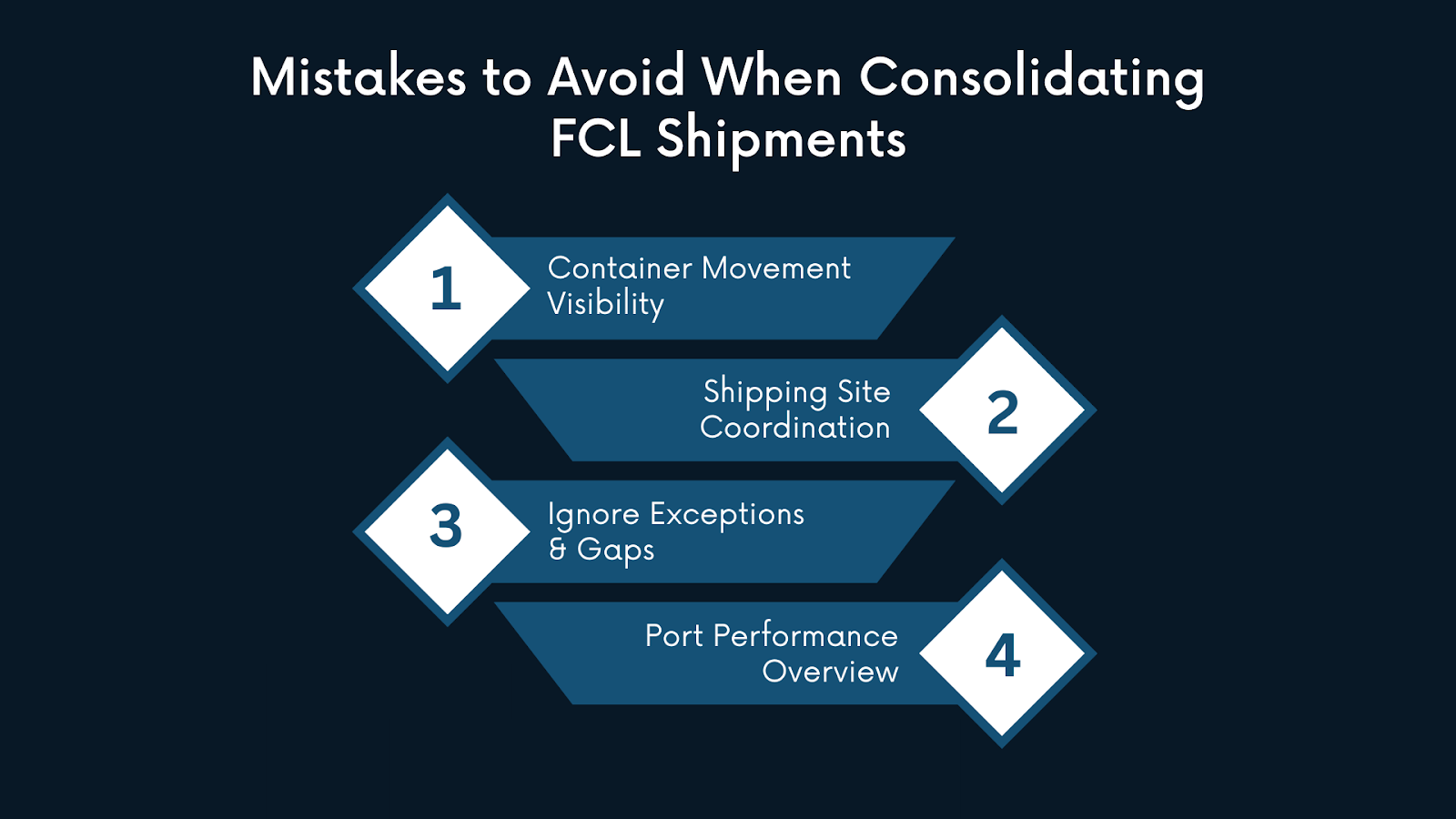
1. Inadequate Visibility into Container Movement
Relying on fragmented carrier portals or outdated EDI feeds can hinder timely responses to delays or disruptions.
Why It Matters:
Without comprehensive, real-time data, teams may miss critical events like vessel cutoffs or late arrivals, leading to increased costs and operational inefficiencies.
How Vizion Helps:
Vizion’s Container Tracking API offers enriched, standardized event data from all major ocean carriers. With 98% shipment coverage and 99.99% uptime performance, Vizion ensures reliable and timely updates.
2. Poor Coordination Between Shipping Sites
Disparate schedules across suppliers or warehouses can result in delayed or underutilized containers.
Why It Matters:
Misaligned cargo readiness disrupts consolidation plans, leading to increased shipping costs and potential service failures.
How Vizion Helps:
By providing real-time tracking data, Vizion enables teams to monitor upstream movements and port arrivals cohesively. This visibility facilitates synchronized consolidation timelines, ensuring containers are fully utilized and dispatched as scheduled.
3. Ignoring Exception and Gap Events
Overlooking gaps or missing events in shipment tracking can conceal issues like transshipment delays or idle containers.
Why It Matters:
Unnoticed delays can accumulate demurrage fees and disrupt downstream logistics, impacting customer satisfaction and operational costs.
How Vizion Helps:
Vizion detects event gaps, dwell time spikes, and routing anomalies throughout the shipment lifecycle. This proactive monitoring allows teams to address issues promptly, mitigating risks before they escalate into significant disruptions.
4. Overlooking Port Performance and Terminal Activity
Many logistics teams focus primarily on container-level tracking, neglecting the broader operational dynamics of ports and terminals. This oversight can lead to unforeseen delays and increased costs.
Why It Matters:
Even meticulously planned FCL shipments can encounter delays if they arrive at congested or inefficient ports.
How Vizion Helps:
Vizion's Port Performance Monitoring provides real-time data on key metrics, including vessel volumes, berth occupancy, and average container dwell times. This information enables shippers to:
- Identify and anticipate potential bottlenecks at specific ports.
- Make informed decisions about rerouting shipments to more efficient terminals.
- Optimize drayage operations by understanding port activity patterns.
By integrating this port-level intelligence with container tracking, businesses can proactively manage risks, avoid demurrage and detention charges, and enhance overall supply chain efficiency.
Conclusion
FCL consolidation works best when every container is visible, trackable, and predictable. That’s where Vizion adds real value. With Vizion, you get clean, standardized container tracking and real-time port insights, delivered straight into your TMS, ERP, or internal systems.
Ready to streamline your FCL logistics?
Discover how Vizion can power smarter consolidation and more responsive supply chains.
%20-%202026-09-17T163139.307.png)
%20-%202026-08-26T095403.692.png)
%20-%202026-08-24T110906.499.png)


