



Global logistics runs on data, but much of it still flows through outdated systems. EDI helped digitize shipping, but it wasn’t built for real-time operations.
Now, speed matters. Teams need faster updates, standardized formats, and systems that work together. In fact, 95% of chief supply chain officers say digital transformation improves efficiency in overcoming supply chain challenges.
This shift is pushing logistics toward API-first platforms that deliver real-time visibility and automation at scale. EDI isn’t going away, but the way data flows is changing.
What is EDI in Supply Chain Management?
Electronic Data Interchange (EDI) in supply chain management has played a central role in global logistics. It allowed companies to exchange shipment updates, booking confirmations, customs documentation, and container milestones through structured digital messages.
By replacing manual paperwork with formats like EDIFACT and ANSI X12, EDI brought automation and consistency to a fragmented industry. It enabled carriers, ports, and freight forwarders to communicate at scale, long before APIs existed.
But while EDI was built for standardization, it wasn’t built for speed.
Key challenges include:
- Batch-based updates: EDI messages are typically transmitted in batches, which means data is often delayed by hours or even days.
- High cost and complexity: EDI integrations are custom-built for each partner and require ongoing maintenance. This slows down onboarding and limits scalability.
- Limited visibility: EDI was not built for real-time tracking. It lacks support for live event updates or enriched data like AIS signals or geolocation.
As global supply chains become more dynamic, these limitations have become more apparent. Logistics teams now need systems that are faster, more flexible, and easier to scale. This is where APIs offer a major advantage.
What Are APIs in Supply Chain Logistics?
APIs, or Application Programming Interfaces, allow systems to exchange data in real time. In logistics, they connect platforms like TMS, ERPs, and carrier systems to deliver faster, automated visibility across the shipment lifecycle.
Unlike EDI, which operates on batch uploads and delayed schedules, APIs deliver data as events happen, enabling live tracking, faster decisions, and fewer blind spots.
Why Are APIs Replacing EDI?
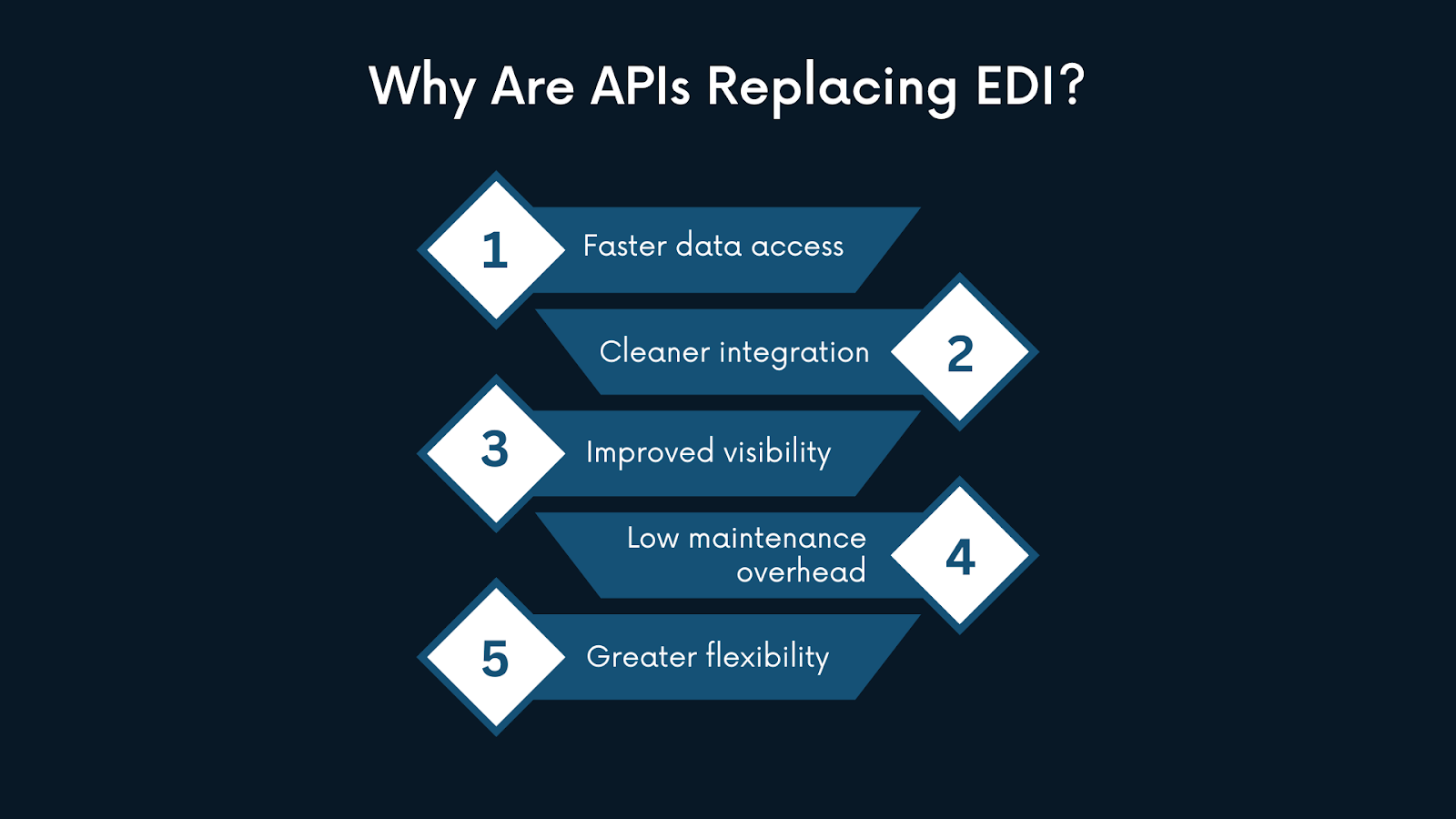
- Faster data access: Receive updates as soon as events occur, reducing delays in decision-making.
- Cleaner integration: APIs follow modern web standards, making it easier to connect systems at scale.
- Improved visibility: Real-time data supports end-to-end tracking across multiple partners.
- Lower maintenance overhead: APIs reduce the need for custom coding and repeated configurations.
- Greater flexibility: Easily adapt to changes in carrier, port, or partner systems without disrupting workflows.
What Vizion Delivers:
- 99% global freight coverage across more than 150 carriers and NVOCCs.
- Container tracking and ETAs sourced from carriers, terminals, and AIS data.
- Demurrage cost control with last free date alerts to support timely pickups.
- Port call milestones and vessel arrival planning to reduce surprises at destination.
- Hourly update generation with the ability to map container movement in real time.
- 24/7 expert support to resolve issues and maintain continuity.
Also Read: The Rise of APIs in Shipping & Logistics
The Role of DCSA and SMDG in Data Standardization
In the evolving landscape of supply chain logistics, the coexistence of legacy systems like EDI and modern APIs presents a challenge: ensuring seamless communication across diverse platforms. This is where standardization becomes crucial.
DCSA (Digital Container Shipping Association) and SMDG (Ship Message Design Group) are at the forefront of establishing these essential standards:
- DCSA focuses on creating open-source, technology-agnostic standards for container shipping, including API specifications that promote real-time data exchange and interoperability among carriers, shippers, and other stakeholders.
- SMDG specializes in developing and maintaining EDI message standards, ensuring consistent and structured data exchange in maritime logistics.
Vizion's offerings are designed with these standards in mind, providing clients with:
- Standardized data formats: Delivering consistent and structured information regardless of the source.
- Enhanced visibility: Offering real-time tracking and updates aligned with industry standards.
- Simplified integration: Enabling easier adoption and integration into existing systems.
Embracing the standards set by DCSA and SMDG is not just about compliance; it's about building a more connected, efficient, and resilient supply chain.
Also read: How APIs Are Bringing Confidence To Stakeholders?
What’s Next for Supply Chain Visibility: APIs, EDI, and the Power of Standardization
Supply chains are under growing pressure to deliver real-time transparency. But most systems still rely on a mix of APIs, EDI, and manual workflows, creating delays, gaps, and duplication.
The answer isn’t to replace EDI. It’s to make it work better alongside APIs.
This is where standardization matters. Groups like DCSA and SMDG are aligning how the industry defines events, ports, and timestamps, so EDI and API systems can finally speak the same language.
With shared formats:
- APIs are easier to adopt
- Data becomes more consistent
- Integrations take less time
Vizion supports this shift by transforming fragmented carrier data into enriched, standardized shipment updates. With support for a wide range of milestone events and real-time webhook delivery, it enables consistent visibility across both API-based platforms and legacy EDI systems.
Conclusion
Digital transformation in logistics isn't about choosing between old and new; it's about connecting them. EDI brought structure to global shipping. APIs now bring speed, flexibility, and automation. But without shared standards, both fall short.
Vizion delivers on this future. By standardizing enriched shipment data and supporting both API-first and legacy systems, Vizion helps logistics teams gain clarity, move faster, and plan smarter.
Ready to close the gap between visibility and action?
Book a demo and see how Vizion transforms supply chain data into decisions.
%20-%202026-09-17T163139.307.png)
%20-%202026-08-26T095403.692.png)
%20-%202026-08-24T110906.499.png)


