Back to Resources

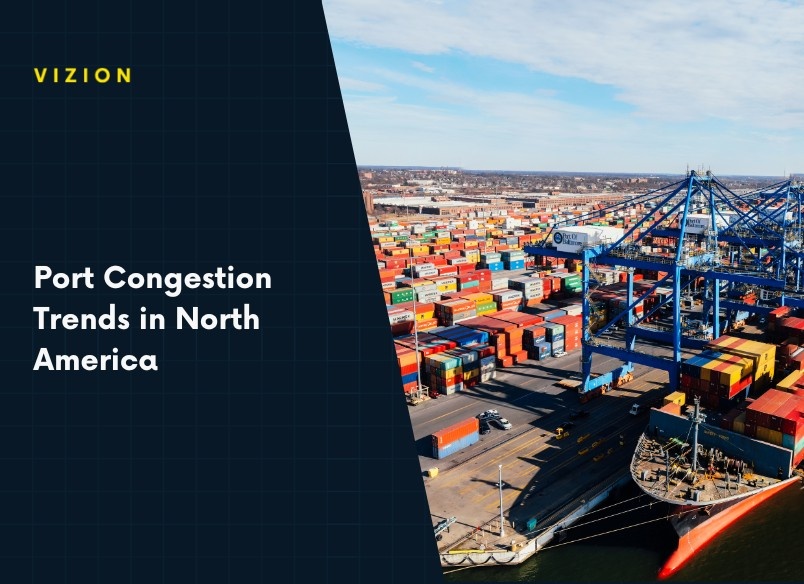
Port Congestion Trends in North America

May 15, 2025

Port congestion in North America has reached unprecedented levels, leading to widespread disruptions in global supply chains. As of March 2025, approximately 8.4% of the worldwide container fleet, around 2.65 million TEUs, is delayed due to ongoing port congestion. These delays are causing major headaches for shippers, driving up costs and disrupting schedules.

Several factors are contributing to port congestion in North America, including its impact on the economy, the environment, and society. Vizion can help businesses manage port issues by offering real-time container tracking and enhancing supply chain visibility, enabling them to handle these challenges effectively.

Understanding Port Congestion in North America

Port congestion occurs when ships are unable to load or unload their cargo promptly due to overwhelmed facilities, labor shortages, or operational inefficiencies. This results in backlogs, shipment delays, and rising costs. Ports become choke points, slowing down the entire supply chain.

Factors Contributing to Port Issues in North America

Several factors drive port congestion in North America:

  • Surging Trade Volumes: High global demand, particularly driven by e-commerce growth, puts significant pressure on port capacity, resulting in delays.
  • Aging Infrastructure: Many North American ports struggle to upgrade infrastructure quickly enough to handle larger vessels and growing container volumes.
  • Labor Shortages: A shortage of dockworkers, crane operators, and truck drivers exacerbates delays and slows down cargo movement at ports.
  • Geopolitical Disruptions: Ongoing global tensions and trade route shifts put additional strain on North American ports as vessels are rerouted to avoid disruptions elsewhere.

With congestion pressures continuing to rise, it is essential to examine the latest trends shaping port operations in 2025 and how they will continue to influence the flow of goods across North American ports. 

A deeper dive into the port congestion challenges and analysis for 2025 reveals how these trends are expected to impact port congestion in the near future.

Key Trends Driving Port Congestion in North America

The growing congestion at North American ports is a result of several ongoing trends. By examining the most recent data, we can gain a better understanding of how port issues has evolved and what businesses need to prepare for in 2025.

1. Anchor Time Trends

In 2024, nine out of eleven major North American ports experienced increases in average anchor times, reflecting worsening congestion levels. The increased anchor times indicate that ships are spending more time waiting to unload or load cargo, further delaying the flow of goods.

  • Charleston experienced a delay of +0.7 days, resulting in vessels being delayed by over 16 hours compared to 2023.
  • Vancouver and Norfolk also experienced significant increases of +0.7 days and +0.3 days, respectively, causing delays of more than 5 hours.
  • Overall, the average anchor time across North American ports increased to 0.6 days (14 hours), indicating significant delays and worsening congestion throughout the region.

2. Ports with Improved Congestion Levels

While many ports saw worsening congestion, a few ports managed to improve their handling times in 2024, reflecting ongoing efforts to reduce delays.

  • Houston and Savannah were the exceptions, with Houston showing a slight improvement of -0.1 days and Savannah a reduction of -0.3 days in anchor time.
  • However, the overall picture remains challenging, with most major ports, such as Charleston and Vancouver, experiencing significant delays in the same period.

3. U.S.-Asia Congestion

The U.S. West Coast (USWC) ports are still recovering from the backlog created by front-loading activities. As trade surged in Q1 2025, there was a 20-30% increase in congestion at these ports compared to the same period in 2024. This increase in import volumes, driven by higher demand and shipping volume, continues to overwhelm port capacity.

4. U.S.-Europe and U.S.-LATAM Trends

Ports along the U.S. East Coast (USEC) and Gulf Coast (USGC) are facing tighter vessel space due to carrier alliance reshuffling. This has caused a shortage of available berths and delays in unloading cargo, making it more difficult for ships to find space.

  • Additionally, delays at transshipment ports in Asia have affected space availability at U.S. ports, resulting in blank sailings and further contributing to backlogs.

5. Port Congestion on the U.S.-South Asia, Middle East, and Africa Routes

Delays at key Asia transshipment hubs continue to disrupt schedules on these routes, resulting in higher rates of blank sailings and space shortages on essential trade lanes.

  • With shipping companies unable to maintain schedules due to port issues, there is an increased risk of delays throughout the entire supply chain, affecting industries that rely on goods moving from Asia to the U.S.

6. Other Contributing Factors

In addition to the major trends contributing to port congestion, several other factors exacerbate delays at key ports. 

  • Chassis shortages have added to the congestion. Many ocean carriers have reduced their involvement in providing chassis, creating a shortage that hampers the movement of containers from port to their next destination.
  • Port strikes at key ports on both the U.S. East and West Coasts have further disrupted port operations, resulting in delays in container handling and increased congestion.

How Tracking Key Milestones Helps Manage Port Congestion

Accurate tracking and monitoring of key milestones at ports is crucial for managing congestion and mitigating its effects on the overall supply chain. By tracking these milestones, businesses can make more informed decisions, reduce delays, and avoid costly obstacles in congested ports. 

Here’s how you can track these milestones and learn how Vizion’s solutions can help.

1. Discharged from Vessel at Destination Port

This marks the point at which a container has been removed from the vessel and is ready for unloading.

  • Why it helps with congestion: Knowing when a container is discharged allows businesses to take timely action, preparing the necessary equipment or transport to move the container swiftly, avoiding any unnecessary delays in terminal handling.
  • How Vizion helps: Vizion offers real-time updates on when containers are discharged from vessels, providing the visibility needed to act immediately and keep cargo moving efficiently.

2. Available for Pickup

This milestone indicates that the container is ready to leave the terminal and can be scheduled for pickup.

  • Why it helps with congestion: Tracking this event enables businesses to schedule timely pickups, preventing containers from sitting idle at the terminal, which can help reduce port congestion. Delays here can exacerbate congestion and lead to additional storage costs.
  • How Vizion helps: Vizion ensures businesses receive real-time updates when containers are available for pickup, allowing them to plan logistics proactively and avoid congestion at the terminal.

3. Gate Out from Destination Port

This milestone marks the point when the container has exited the port and is en route to its next destination.

  • Why it helps with congestion: By tracking the gate-out milestone, businesses can monitor the flow of containers and ensure they are leaving the port on time, reducing the risk of further delays and freeing up space for incoming shipments.
  • How Vizion helps: Vizion’s real-time tracking enables businesses to monitor when containers depart the port, allowing them to adjust their next steps and minimize congestion caused by containers lingering at the terminal.

4. Free Time to Expire

This is the critical milestone when the free time allotted for a container’s stay at the terminal is about to expire. After this, demurrage charges start to apply.

  • Why it helps with congestion: Tracking when free time expires enables businesses to take action before incurring unnecessary fees, thereby preventing containers from being held up at the terminal, which can exacerbate congestion.
  • How Vizion helps: Vizion tracks the expiration of free time and alerts businesses in advance, ensuring they can plan pickups and avoid costly demurrage fees that can contribute to congestion at the port.

5. Gate In Empty Return

This event occurs when the empty container is returned after unloading its cargo.

  • Why it helps with congestion: Timely return of empty containers is essential to ensure the efficient use of terminal space. Delays in returning empty containers can contribute to space shortages and further congestion.
  • How Vizion helps: Vizion provides real-time tracking data on when empty containers are returned, enabling businesses to coordinate returns quickly and keep terminals running smoothly.

By tracking these key milestones, businesses gain the visibility they need to reduce delays and manage port issues more effectively. Vizion’s real-time container tracking provides the tools businesses need to make informed decisions, optimize logistics, and avoid costly demurrage and detention charges, as well as disruptions associated with port congestion.

Conclusion

Port congestion continues to challenge North American ports in 2025, driven by increased trade volumes, outdated infrastructure, labor shortages, and the lingering effects of the pandemic. These issues lead to delays, rising costs, and significant disruptions in the supply chain.

With real-time tracking and visibility, businesses can better manage port issues and minimize their impact on operations. Vizion provides real-time container tracking, enabling businesses to monitor key milestones, like free time expiration and pickup availability.

Book a demo:

  • Real-Time Container Tracking: Gain access to the most complete, standardized, and detailed container tracking events via API or user interface with real-time container data.
  • TradeView: Monitor the live flow of any company's shipments 30 to 90 days before arrival at destination and analyze trends across 10 years of historical supplier, product, and logistics movement data. With 900 million shipment records, 140+ attributes per shipment, coverage spanning 190 countries, and comprehensive HS code data, TradeView empowers data-driven decisions that optimize global trade management.

Logistics Performance Hub: Access a comprehensive suite of global logistics datasets, including Port Performance, Port Activity, and Port Pairs, to analyze shipping trends, port throughput, container dwell times, and real-time port activity, enabling smarter decision making about containerized freight movements.

Get the Most Advanced Visibility into the Journey of Your Ocean and Rail Containers

Talk to one of our supply chain experts to get started now.

Talk to an Expert

Thank you for your submission!

A member of the Vizion team will be in touch shortly.
Oops! Something went wrong while submitting the form.

Talk to an Expert

Thank you for your submission!

A member of the Vizion team will be in touch shortly.
Oops! Something went wrong while submitting the form.
close modal icon

Book a Demo

Are you ready to experience the many benefits of container visibility? Schedule a VIZION API demo today.

Thank you for your submission!

A member of the Vizion team will be in touch shortly.
Oops! Something went wrong while submitting the form.
close modal icon

Port Congestion Trends in North America

May 15, 2025

Port congestion in North America has reached unprecedented levels, leading to widespread disruptions in global supply chains. As of March 2025, approximately 8.4% of the worldwide container fleet, around 2.65 million TEUs, is delayed due to ongoing port congestion. These delays are causing major headaches for shippers, driving up costs and disrupting schedules.

Several factors are contributing to port congestion in North America, including its impact on the economy, the environment, and society. Vizion can help businesses manage port issues by offering real-time container tracking and enhancing supply chain visibility, enabling them to handle these challenges effectively.

Understanding Port Congestion in North America

Port congestion occurs when ships are unable to load or unload their cargo promptly due to overwhelmed facilities, labor shortages, or operational inefficiencies. This results in backlogs, shipment delays, and rising costs. Ports become choke points, slowing down the entire supply chain.

Factors Contributing to Port Issues in North America

Several factors drive port congestion in North America:

  • Surging Trade Volumes: High global demand, particularly driven by e-commerce growth, puts significant pressure on port capacity, resulting in delays.
  • Aging Infrastructure: Many North American ports struggle to upgrade infrastructure quickly enough to handle larger vessels and growing container volumes.
  • Labor Shortages: A shortage of dockworkers, crane operators, and truck drivers exacerbates delays and slows down cargo movement at ports.
  • Geopolitical Disruptions: Ongoing global tensions and trade route shifts put additional strain on North American ports as vessels are rerouted to avoid disruptions elsewhere.

With congestion pressures continuing to rise, it is essential to examine the latest trends shaping port operations in 2025 and how they will continue to influence the flow of goods across North American ports. 

A deeper dive into the port congestion challenges and analysis for 2025 reveals how these trends are expected to impact port congestion in the near future.

Key Trends Driving Port Congestion in North America

The growing congestion at North American ports is a result of several ongoing trends. By examining the most recent data, we can gain a better understanding of how port issues has evolved and what businesses need to prepare for in 2025.

1. Anchor Time Trends

In 2024, nine out of eleven major North American ports experienced increases in average anchor times, reflecting worsening congestion levels. The increased anchor times indicate that ships are spending more time waiting to unload or load cargo, further delaying the flow of goods.

  • Charleston experienced a delay of +0.7 days, resulting in vessels being delayed by over 16 hours compared to 2023.
  • Vancouver and Norfolk also experienced significant increases of +0.7 days and +0.3 days, respectively, causing delays of more than 5 hours.
  • Overall, the average anchor time across North American ports increased to 0.6 days (14 hours), indicating significant delays and worsening congestion throughout the region.

2. Ports with Improved Congestion Levels

While many ports saw worsening congestion, a few ports managed to improve their handling times in 2024, reflecting ongoing efforts to reduce delays.

  • Houston and Savannah were the exceptions, with Houston showing a slight improvement of -0.1 days and Savannah a reduction of -0.3 days in anchor time.
  • However, the overall picture remains challenging, with most major ports, such as Charleston and Vancouver, experiencing significant delays in the same period.

3. U.S.-Asia Congestion

The U.S. West Coast (USWC) ports are still recovering from the backlog created by front-loading activities. As trade surged in Q1 2025, there was a 20-30% increase in congestion at these ports compared to the same period in 2024. This increase in import volumes, driven by higher demand and shipping volume, continues to overwhelm port capacity.

4. U.S.-Europe and U.S.-LATAM Trends

Ports along the U.S. East Coast (USEC) and Gulf Coast (USGC) are facing tighter vessel space due to carrier alliance reshuffling. This has caused a shortage of available berths and delays in unloading cargo, making it more difficult for ships to find space.

  • Additionally, delays at transshipment ports in Asia have affected space availability at U.S. ports, resulting in blank sailings and further contributing to backlogs.

5. Port Congestion on the U.S.-South Asia, Middle East, and Africa Routes

Delays at key Asia transshipment hubs continue to disrupt schedules on these routes, resulting in higher rates of blank sailings and space shortages on essential trade lanes.

  • With shipping companies unable to maintain schedules due to port issues, there is an increased risk of delays throughout the entire supply chain, affecting industries that rely on goods moving from Asia to the U.S.

6. Other Contributing Factors

In addition to the major trends contributing to port congestion, several other factors exacerbate delays at key ports. 

  • Chassis shortages have added to the congestion. Many ocean carriers have reduced their involvement in providing chassis, creating a shortage that hampers the movement of containers from port to their next destination.
  • Port strikes at key ports on both the U.S. East and West Coasts have further disrupted port operations, resulting in delays in container handling and increased congestion.

How Tracking Key Milestones Helps Manage Port Congestion

Accurate tracking and monitoring of key milestones at ports is crucial for managing congestion and mitigating its effects on the overall supply chain. By tracking these milestones, businesses can make more informed decisions, reduce delays, and avoid costly obstacles in congested ports. 

Here’s how you can track these milestones and learn how Vizion’s solutions can help.

1. Discharged from Vessel at Destination Port

This marks the point at which a container has been removed from the vessel and is ready for unloading.

  • Why it helps with congestion: Knowing when a container is discharged allows businesses to take timely action, preparing the necessary equipment or transport to move the container swiftly, avoiding any unnecessary delays in terminal handling.
  • How Vizion helps: Vizion offers real-time updates on when containers are discharged from vessels, providing the visibility needed to act immediately and keep cargo moving efficiently.

2. Available for Pickup

This milestone indicates that the container is ready to leave the terminal and can be scheduled for pickup.

  • Why it helps with congestion: Tracking this event enables businesses to schedule timely pickups, preventing containers from sitting idle at the terminal, which can help reduce port congestion. Delays here can exacerbate congestion and lead to additional storage costs.
  • How Vizion helps: Vizion ensures businesses receive real-time updates when containers are available for pickup, allowing them to plan logistics proactively and avoid congestion at the terminal.

3. Gate Out from Destination Port

This milestone marks the point when the container has exited the port and is en route to its next destination.

  • Why it helps with congestion: By tracking the gate-out milestone, businesses can monitor the flow of containers and ensure they are leaving the port on time, reducing the risk of further delays and freeing up space for incoming shipments.
  • How Vizion helps: Vizion’s real-time tracking enables businesses to monitor when containers depart the port, allowing them to adjust their next steps and minimize congestion caused by containers lingering at the terminal.

4. Free Time to Expire

This is the critical milestone when the free time allotted for a container’s stay at the terminal is about to expire. After this, demurrage charges start to apply.

  • Why it helps with congestion: Tracking when free time expires enables businesses to take action before incurring unnecessary fees, thereby preventing containers from being held up at the terminal, which can exacerbate congestion.
  • How Vizion helps: Vizion tracks the expiration of free time and alerts businesses in advance, ensuring they can plan pickups and avoid costly demurrage fees that can contribute to congestion at the port.

5. Gate In Empty Return

This event occurs when the empty container is returned after unloading its cargo.

  • Why it helps with congestion: Timely return of empty containers is essential to ensure the efficient use of terminal space. Delays in returning empty containers can contribute to space shortages and further congestion.
  • How Vizion helps: Vizion provides real-time tracking data on when empty containers are returned, enabling businesses to coordinate returns quickly and keep terminals running smoothly.

By tracking these key milestones, businesses gain the visibility they need to reduce delays and manage port issues more effectively. Vizion’s real-time container tracking provides the tools businesses need to make informed decisions, optimize logistics, and avoid costly demurrage and detention charges, as well as disruptions associated with port congestion.

Conclusion

Port congestion continues to challenge North American ports in 2025, driven by increased trade volumes, outdated infrastructure, labor shortages, and the lingering effects of the pandemic. These issues lead to delays, rising costs, and significant disruptions in the supply chain.

With real-time tracking and visibility, businesses can better manage port issues and minimize their impact on operations. Vizion provides real-time container tracking, enabling businesses to monitor key milestones, like free time expiration and pickup availability.

Book a demo:

  • Real-Time Container Tracking: Gain access to the most complete, standardized, and detailed container tracking events via API or user interface with real-time container data.
  • TradeView: Monitor the live flow of any company's shipments 30 to 90 days before arrival at destination and analyze trends across 10 years of historical supplier, product, and logistics movement data. With 900 million shipment records, 140+ attributes per shipment, coverage spanning 190 countries, and comprehensive HS code data, TradeView empowers data-driven decisions that optimize global trade management.

Logistics Performance Hub: Access a comprehensive suite of global logistics datasets, including Port Performance, Port Activity, and Port Pairs, to analyze shipping trends, port throughput, container dwell times, and real-time port activity, enabling smarter decision making about containerized freight movements.

Talk to an Expert

Book A Demo

Are you ready to experience the many benefits of container visibility? Schedule a VIZION API demo today.

close icon
Only valid business email addresses.
Please include country code.
Thank you! Your submission has been received!
Oops! Something went wrong while submitting the form.