


Intermodal transportation involves using multiple modes of transport, such as sea, rail, and road, to move goods efficiently across long distances. By combining these methods, businesses can cut costs, speed up deliveries, and gain more flexibility in their supply chains. With the market projected to grow from $58.85 billion in 2024 to $67.97 billion in 2025 at a 15.5% CAGR, intermodal freight is clearly gaining momentum worldwide.
However, managing intermodal shipments can be complex. Without real-time visibility across the entire journey from port to rail and beyond, delays, inefficiencies, and costly mistakes can occur.
Smart container tracking solutions, like Vizion, play a crucial role in providing end-to-end visibility. It makes intermodal transportation work more efficiently by delivering container tracking across both maritime and rail transport.
What is Intermodal Transportation?
Intermodal Transportation is the process of moving goods using two or more different modes of transport, like sea, rail, and road, under a single shipping contract. It involves several transport types managed through a single Bill of Lading (BOL) or intermodal shipping container. The shipping container is designed to be easily transferred across different modes of transport without having to unload and reload the contents.
This approach allows for a more efficient and cost-effective method of transporting cargo across vast distances, particularly when involving long-haul international shipments. Let’s look at the main components of intermodal transport below:
- Maritime Shipping: It is the most common and cost-effective mode for long-distance freight transport, especially for international shipments. Containerized cargo is loaded onto large container ships at ports, traveling across oceans to major port hubs.
- Rail Transport: Rail is increasingly preferred for long-distance inland transportation due to its fuel efficiency and ability to handle large volumes of cargo. Rail networks offer a reliable and high-capacity solution for transporting containers from ports to inland distribution centers. It offers cheaper rates than road transport for long-haul journeys.
- Road Transport: Often used as the final step in the intermodal chain, road transport moves goods from rail terminals or seaports to the final delivery points. It offers unmatched flexibility, covering areas that are inaccessible by rail or sea.
What are the Benefits of Intermodal Transportation?
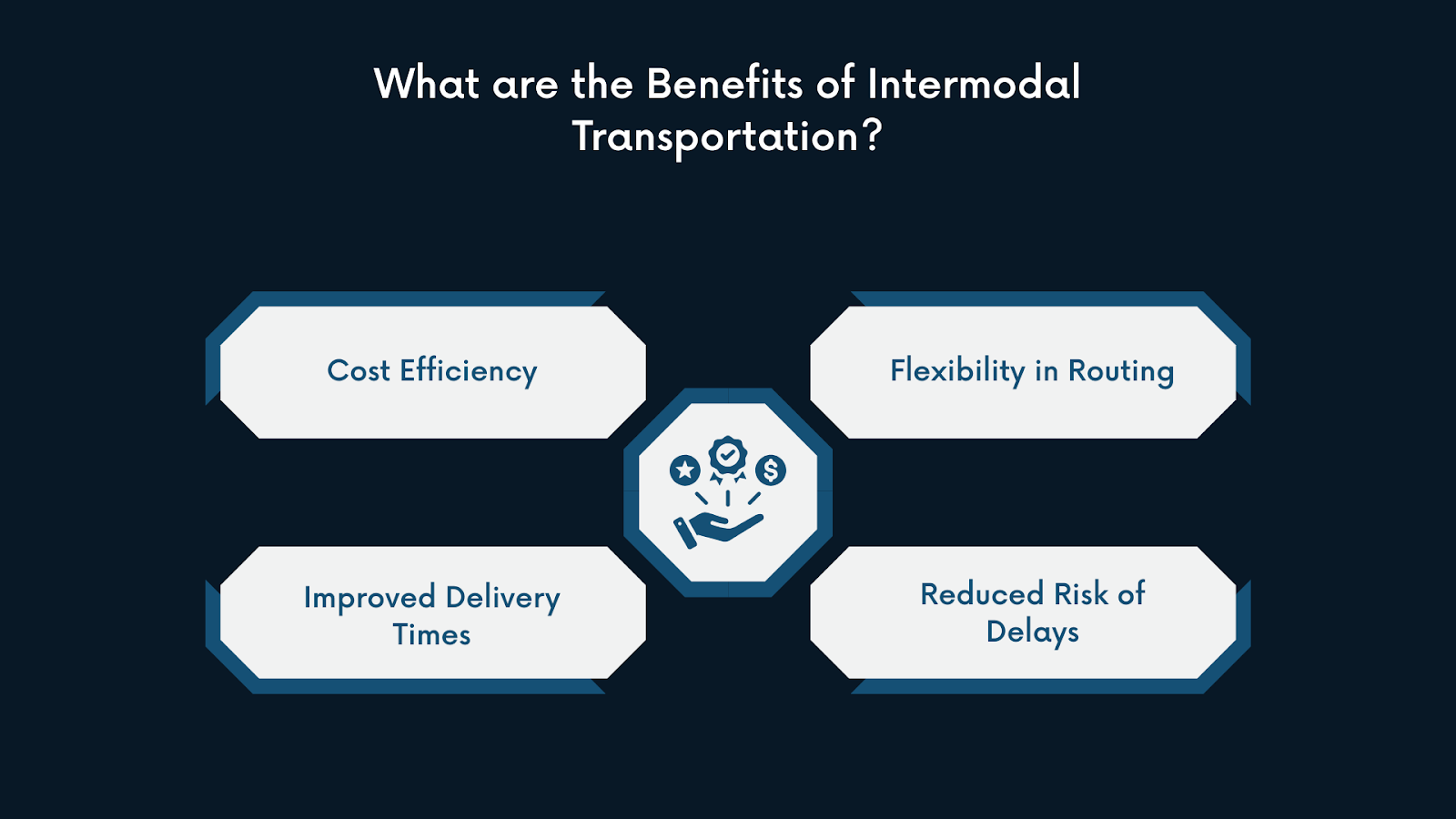
Intermodal transportation offers a range of advantages that help businesses optimize their supply chain operations. Let’s look at these below:
1. Cost Efficiency
By selecting the most suitable transport mode for each leg of the journey, intermodal transportation reduces overall logistics costs. Rail and maritime transport, in particular, tend to be more economical for long-haul shipments compared to road transport alone.
2. Flexibility in Routing
Intermodal transport allows businesses to adapt to changing conditions by providing flexibility to choose the most efficient and reliable routes. This optimizes delivery times and is especially beneficial for international shipments, where shipping needs can vary based on geography and infrastructure.
3. Improved Delivery Times
Using multiple transport modes allows businesses to bypass congestion or delays in one mode by utilizing others. This leads to faster and more reliable delivery times, as well as improved customer satisfaction, especially in high-demand or time-sensitive markets.
4. Reduced Risk of Delays
With better coordination and advanced tracking, intermodal transportation reduces the risk of delays caused by unexpected disruptions. Real-time visibility enables businesses to address potential issues quickly, ensuring smoother transitions between different modes of transportation.
The Role of Smarter Container Visibility in Intermodal Transportation
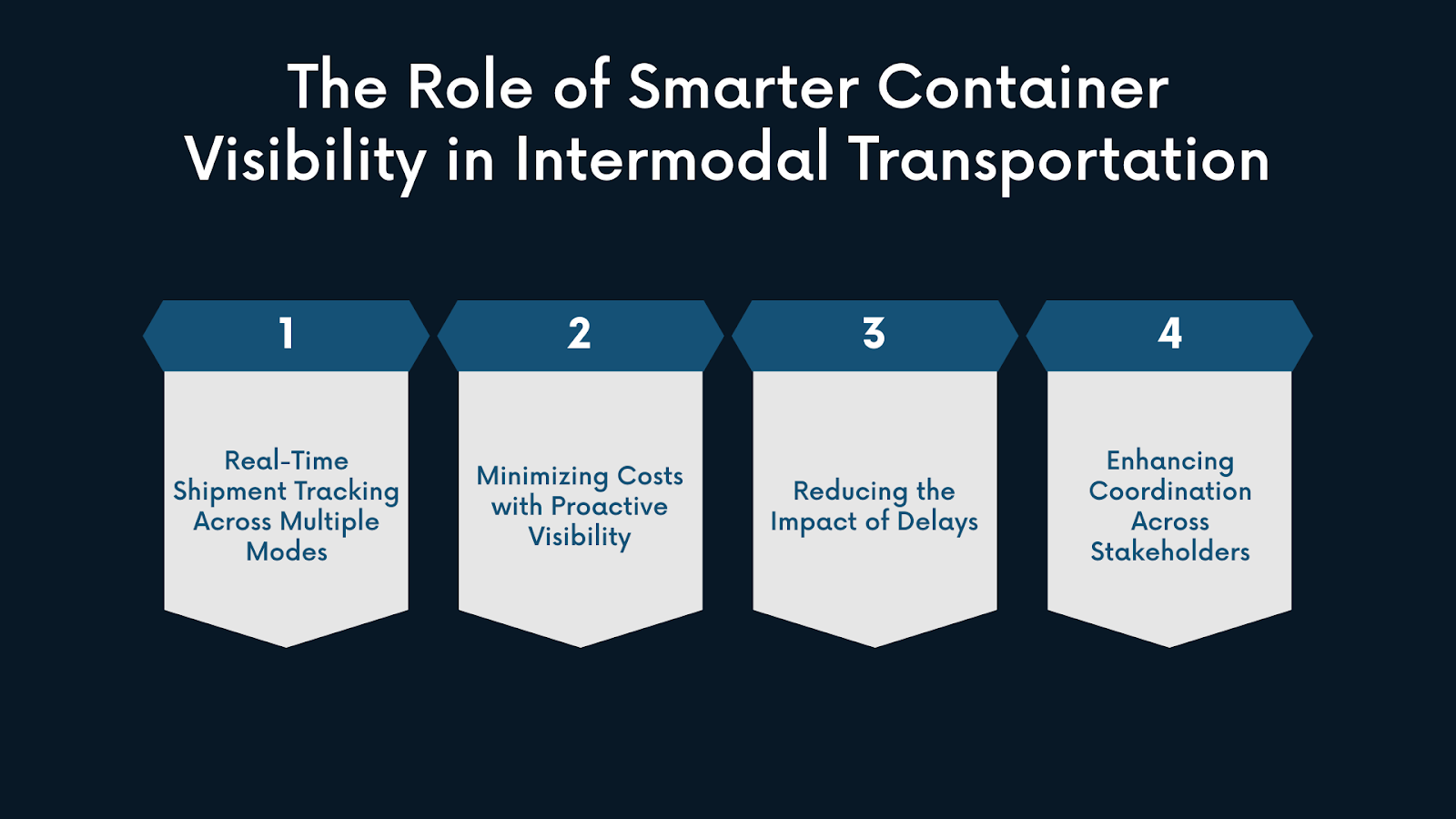
In the complex world of intermodal transportation, the ability to track shipments across multiple modes of transportation is crucial for maintaining efficiency. Smarter container visibility solutions provide businesses with continuous monitoring to address potential disruptions early on and maintain an efficient flow of goods.
1. Real-Time Shipment Tracking Across Multiple Modes
With smarter container visibility, businesses can track shipments at every step of the journey, from the moment cargo leaves the port to its arrival at the final destination. It ensures that companies always have up-to-date information on container locations, estimated times of arrival, and critical inland events like the Last Free Date.
2. Minimizing Costs with Proactive Visibility
Smart tracking solutions provide real-time alerts of potential issues like delays at the port or congestion at the rail yard to aid with decision-making. By proactively addressing these challenges, companies can avoid costly demurrage and detention charges.
3. Reducing the Impact of Delays
Visibility ensures that if a shipment is delayed at one stage, businesses can adjust the rest of the supply chain accordingly. They can reroute shipments, reschedule pick-ups, or find alternate solutions to keep things moving. This flexibility helps prevent a single delay from having a ripple effect on the entire journey.
4. Enhancing Coordination Across Stakeholders
Smarter container tracking enables better coordination between the various parties involved in the intermodal transport process. Shipping lines, rail operators, and road transport providers can all access a single source of truth, reducing the risk of miscommunication or missed connections.
This collaborative approach ensures that each part of the journey runs smoothly and minimizes disruptions.
What are the Challenges Present in Intermodal Transportation?
Intermodal transportation is highly beneficial to stakeholders but presents several challenges that can disrupt efficiency and increase costs. These challenges primarily arise from gaps in visibility, coordination issues, and complex logistics management. Let’s explore them below:
1. Visibility Gaps and Data Fragmentation
In intermodal transportation, each transport mode typically operates with its own tracking system. This fragmentation creates visibility gaps, especially when shipments transition between modes. Without a unified tracking system, companies often struggle to track the entire journey of a container, leading to uncertainty, inefficiencies, and potential delays.
Vizion’s Solution: Vizion provides end-to-end visibility by integrating real-time data from all transport modes into a single API-driven solution. This integration ensures businesses get complete visibility throughout the shipment process.
2. Coordination Between Multiple Stakeholders
Intermodal transportation involves a wide range of stakeholders, like shipping lines, rail operators, terminal handlers, etc., who manage different segments of the journey. The lack of coordination and standardization between these parties results in communication errors, delays, and missed connections when shipments cross regional or international borders.
Vizion’s solution: Vizion bridges this gap by providing a centralized solution where all stakeholders can access real-time tracking data. By integrating Vizion’s API, companies can streamline communication between parties, ensuring everyone involved is on the same page.
3. The Ripple Effect of Delays
A delay in one transport mode can set off a chain reaction of delays in other modes, like rail or road. These delays not only disrupt the supply chain but also result in costly demurrage charges, missed deadlines, and unhappy customers.
Vizion’s Solution: With real-time alerts and continuous monitoring, Vizion helps businesses avoid potential delays. It offers proactive notifications about any issues, like delays at ports, rail disruptions, etc. It enables businesses to quickly adjust their logistics plans, reroute shipments, or reschedule pickups accordingly.
4. Complex Documentation and Regulatory Requirements
Intermodal shipments require various forms of documentation, including bills of lading, customs clearance papers, and regulatory compliance certificates. Different transport modes have their own set of requirements, making it challenging to manage all the necessary documents and ensure compliance.
Vizion’s solution: Vizion’s integrated tracking system simplifies documentation management by providing real-time data updates for each mode of transport. By having access to all necessary shipment details in one place, businesses can ensure that documents are updated and compliant across all stages of the shipment.
Vizion offers a best-in-class container tracking solution to enhance the management of intermodal shipments and streamline the logistics process.
Enhance Intermodal Container Tracking With Vizion
Vizion’s API-driven solution is designed to provide businesses with real-time tracking across both rail and maritime shipping containers. By offering end-to-end visibility, Vizion enables businesses to optimize their intermodal transportation operations. Let’s explore how:
1. API-Driven Real-Time Data
Vizion’s real-time container tracking solution is powered by an API that aggregates data from multiple transport modes into a unified platform. This allows businesses to access the most up-to-date information about their shipments at every step of the journey.
2. End-to-End Monitoring
One of the key features of Vizion is its ability to provide end-to-end visibility for intermodal shipments. It ensures that businesses can track the precise location, status, and estimated time of arrival of a shipment, whether it is by sea or rail.
3. Minimizing Demurrage and Detention Charges
Delays in intermodal transport can lead to costly demurrage and detention charges. With Vizion, businesses can avoid costly demurrage and detention fees and potential delays by receiving real-time alerts about any disruptions in the shipment’s progress.
4. Data-Enriched Insights for Smarter Decision-Making
In addition to providing real-time tracking data, Vizion offers enriched insights that help businesses make smarter decisions. The data collected from various touchpoints in the supply chain can be analyzed to identify trends, inefficiencies, and opportunities for optimization.
Conclusion
Intermodal transportation offers businesses a strategic advantage by combining multiple modes of transport to enhance efficiency, reduce costs, and improve delivery times. However, managing intermodal shipments can be complex due to the need for visibility, coordination, and timely decision-making.
If you’re looking to streamline your intermodal transportation and gain complete visibility from port to rail, Vizion’s API can help you take control. Book a free demo with Vizion today to benefit from the best container tracking solution across multiple transport modes.
- Real-Time Container Tracking: Gain access to the most complete, standardized, and detailed container tracking events via API or user interface with real-time container data.
- TradeView: Monitor the live flow of any company's shipments 30 to 90 days before arrival at destination and analyze trends across 10 years of historical supplier, product, and logistics movement data. With 900 million shipment records, 140+ attributes per shipment, coverage spanning 190 countries, and comprehensive HS code data, TradeView empowers data-driven decisions that optimize global trade management.
- Logistics Performance Hub: Access a comprehensive suite of global logistics datasets, including Port Performance, Port Activity, and Port Pairs, to analyze shipping trends, port throughput, container dwell times, and real-time port activity, enabling smarter decision-making about containerized freight movements.
FAQs
Q1. What is intermodal transportation in port-to-rail logistics?
A1. Intermodal transportation seamlessly uses multiple transport modes like ships and trains, allowing containers to move from port to rail without unloading.
Q2. Why is container visibility important in intermodal transportation?
A2. Smarter container visibility ensures real-time tracking, minimizes delays, and improves coordination across ports, rails, and terminals in intermodal systems.
Q3. How does technology improve intermodal transportation?
A3. IoT sensors, GPS tracking, and AI-driven analytics offer real-time container data, reducing bottlenecks and enhancing port-to-rail intermodal efficiency.
Q4. What are the benefits of rail in intermodal transportation?
A4. Rail offers lower emissions, cost savings, and reliable long-haul transport, making it ideal for efficient intermodal freight movement from ports inland.
%20-%202026-09-17T163139.307.png)
%20-%202026-08-26T095403.692.png)
%20-%202026-08-24T110906.499.png)


